


By Kirsten Griffin-Sobotik
Positive Phase III melanoma results have put Moderna’s personalized mRNA cancer vaccine in the spotlight and strengthened the case for a much broader oncology platform.
In early August, we re-added a small position in Moderna in the Global Equity Growth Fund.
As COVID-19 vaccine revenue continues to decline, Moderna is working to identify its next growth engine. With one in five people expected to develop cancer in their lifetime, the urgency behind the development of novel treatments has never been greater. Moderna’s next-generation cancer vaccine, called Intismeran Autogene, is emerging as one of the most promising candidates.
The treatment is built individually for each patient using mutations found in that specific patient’s tumour. Mutations are essentially typos in a cell’s instructions that the immune system can be trained to target. As such, Moderna’s cancer vaccine is not a preventative measure, but rather a treatment administered after surgery to eliminate any residual disease. It uses the same mRNA technology as Moderna’s COVID-19 vaccine, delivering instructions that train the body’s immune system to find and destroy remaining cancer cells.
In partnership with Merck’s existing cancer drug Keytruda, Moderna is investigating a combined treatment in which a patient receives both Moderna’s vaccine and Keytruda. The vaccine works by activating the immune system, while Keytruda stops cancer cells from shutting off this newly stimulated immune response.
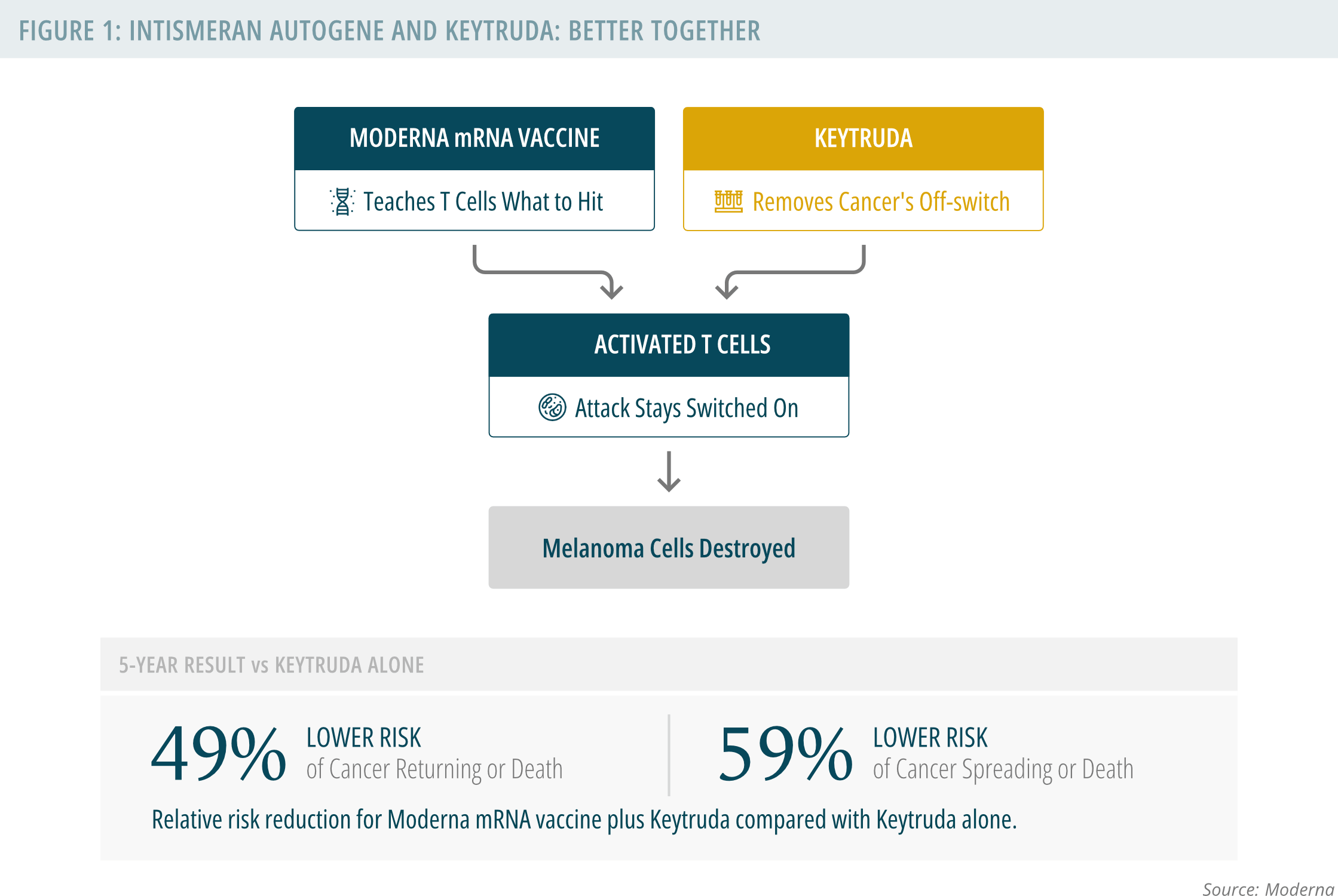
In June, five-year follow-up results from an earlier-stage trial, Phase IIb KEYNOTE-942, demonstrated that combining Moderna’s vaccine with Keytruda produced a lasting 49 percent reduction in the risk of cancer returning or death and a 59 percent reduction in the risk of metastasis, or cancer spreading, or death compared with Keytruda alone in patients with late-stage melanoma.
Those earlier findings have now been reinforced by the larger Phase III INTerpath-001 trial, which enrolled more than 1,000 patients. On August 19, 2026, Moderna and Merck announced that the trial met its primary endpoint, demonstrating improved recurrence-free survival when Intismeran Autogene was combined with Keytruda compared with Keytruda alone. The study also met its key secondary endpoint for distant metastasis-free survival.
The announcement represents an important validation of the underlying cancer vaccine technology and prompted a significant market reaction, with Moderna shares rising approximately 177 percent on August 19. The results strengthen the possibility that Moderna can shift from a declining post-pandemic vaccine business toward a high-growth cancer treatment platform.
Nonetheless, it is not guaranteed that this cancer vaccine will work as well beyond melanoma. Melanoma tumours are among the most visible to the immune system, mainly because they carry many mutations. The more mutated a tumour is, the easier it generally is for the immune system, and immune-based treatments, to recognize and attack it. This has raised the question of whether Moderna’s cancer vaccine effectiveness reflects the treatment itself or melanoma being a more treatable cancer. Management has pointed to consistent results in earlier trials across both heavily mutated and lightly mutated melanoma tumours as evidence that the treatment works regardless. Upcoming results in other cancer types will be the most telling test of that claim.
Under their partnership agreement, Moderna and Merck split the costs as well as worldwide net profits 50/50. For Moderna, this split caps how much upside can be captured from a single drug, but also significantly reduces the financial risk of funding trials. Moderna’s cancer vaccine represents a considerable market opportunity, with the global melanoma therapeutics market estimated to reach $10.3 billion USD by 2030.
Beyond melanoma, lung cancer represents the next most advanced use case for the vaccine and a much larger market opportunity. A positive result in the melanoma trial matters less as a final result and more as proof that the drug can work, potentially opening the door to a much larger market. The lung cancer therapeutics market is estimated at more than $40 billion by 2030, more than four times the size of the melanoma market.
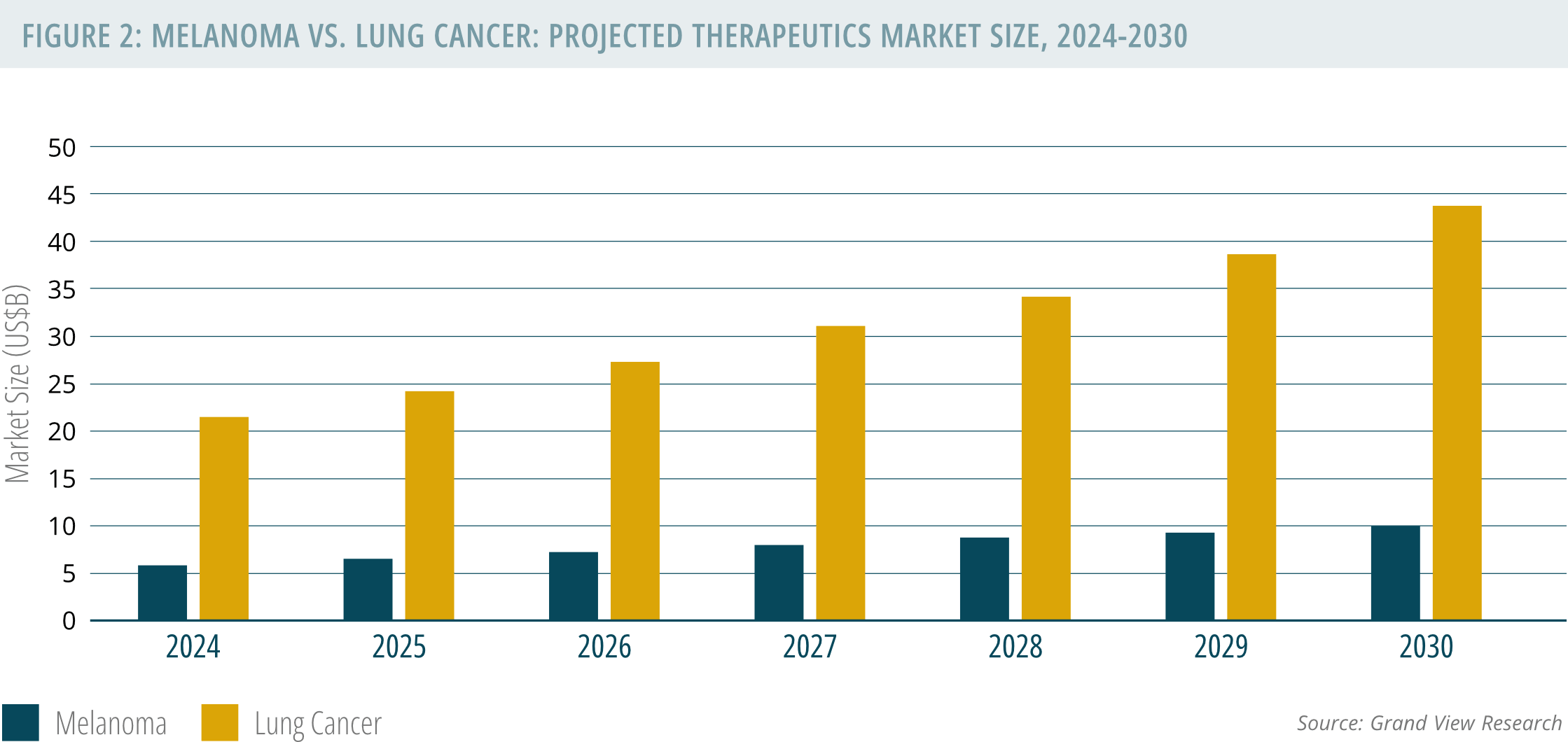
The breadth of applications for the cancer vaccine is at the core of Moderna’s platform. In contrast with standard targeted cancer therapies, which are inherently built for one specific kind of cancer, Moderna’s vaccine is developed using the patient’s tumour mutations at the time of treatment, regardless of the cancer type. In principle, this implies that the platform can be redeployed across solid tumours by manufacturing an individualized vaccine rather than developing an entirely new drug. In this way, Moderna owns not only a single asset, but an entire platform. Furthermore, the probability of two patients having the same mutation is practically zero, making each vaccine unique and potentially providing greater exclusivity than a patent.
Figure 3: Moderna’s Oncology Pipeline (as of July 31, 2026)
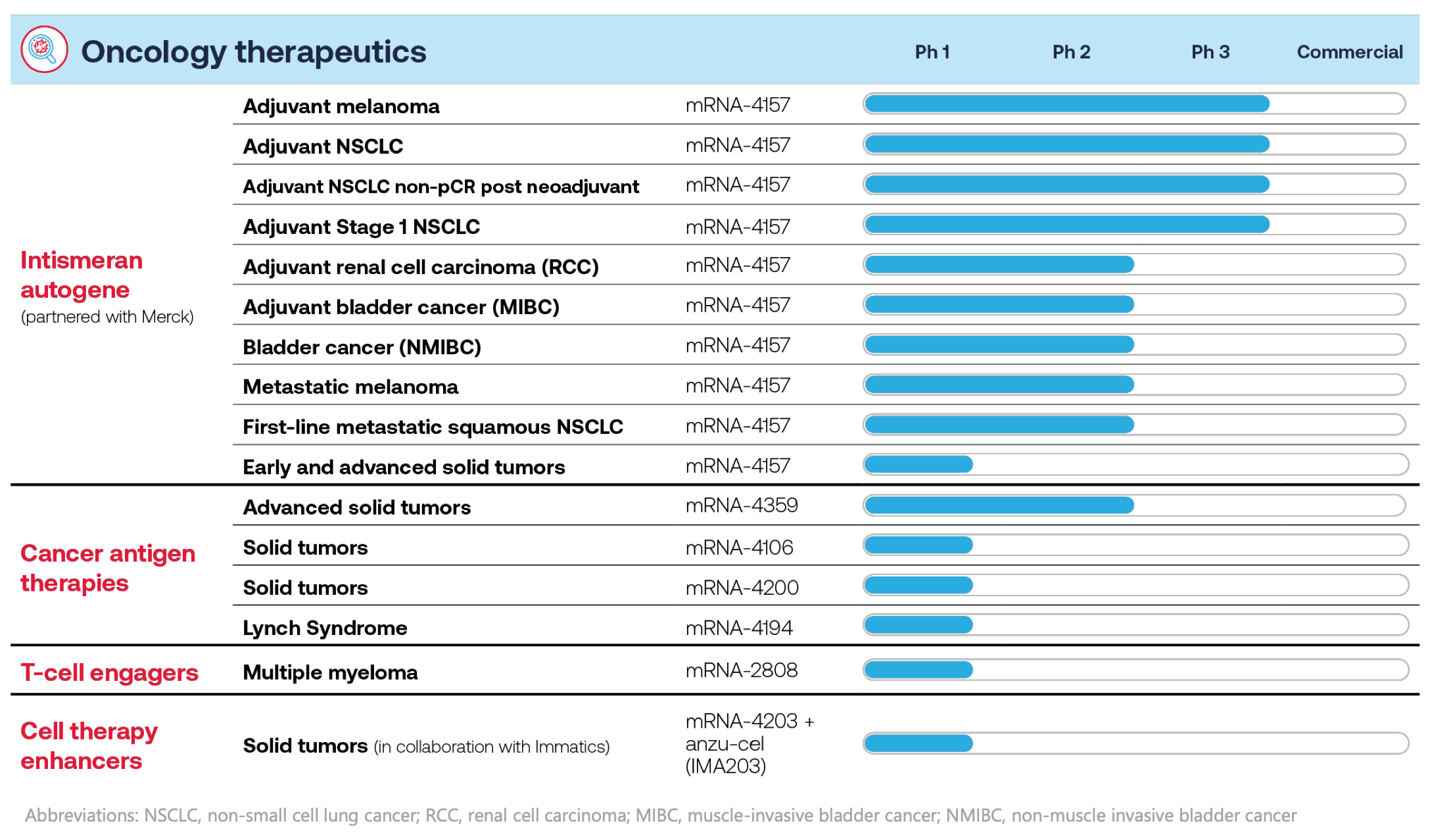
Moderna’s mRNA technology is not limited to one cancer vaccine or one partnership with Merck. The same underlying platform is also being used in areas such as rare diseases, viral infections, respiratory illness and flu vaccines, including Moderna’s recently approved mRNA-based flu vaccine for adults 50 and over. In cancer, Moderna is also building its own pipeline outside the Merck partnership, including treatments for melanoma, lung cancer and blood cancers. These programs are at an earlier stage, but because Moderna owns them outright, they could provide greater long-term upside if successful. Taken together, the pipeline shows that Moderna is trying to turn its mRNA technology into a broad engine for future products rather than relying on any single trial or drug.
The strength of Moderna’s melanoma pipeline is further reinforced by the current competitive context. Several comparable combined treatment approaches from other major drug companies, including Bristol Myers Squibb and Merck, have failed to outperform standard single-drug treatment in trials. BioNTech is also pursuing an individualized cancer vaccine, partnered with Genentech/Roche, but its program remains in earlier-stage trials and has yet to produce comparable data. This suggests Moderna’s cancer vaccine may be succeeding where broader combinations have not and that it currently holds a lead over other mRNA-based programs in development.
Financial Impact
Moderna’s valuation has changed dramatically following the Phase III announcement, with its shares rising approximately 177 percent on August 19 as investors reacted to the successful late-stage melanoma trial. The magnitude of the move illustrates how significantly the market’s assessment of Moderna’s oncology opportunity changed following the results.
Against consensus estimates of approximately $3 billion in annual melanoma revenue by 2035, before accounting for other cancer types, the successful Phase III trial provides meaningful validation for a commercial opportunity that extends beyond melanoma. In our view, the differentiated strength of the mRNA platform lies in its consistent results regardless of how mutated the tumour is, a distinct mechanism that appears to work effectively where other combination therapies have failed and a pipeline of nine ongoing trials for the cancer vaccine alone.
Moreover, the addressable opportunity extends well beyond melanoma, with lung cancer representing a considerably larger total addressable market. Unlike the opportunity from Moderna’s COVID-19 franchise, which was tied to a single product addressing time-limited demand, the newly developed mRNA platform compounds with each additional cancer indication.
Risks remain, including unproven manufacturing economics, regulatory execution, the ability to reproduce melanoma results across other cancer types and a tightening cash runway. However, the successful late-stage melanoma trial addresses one of the most significant near-term uncertainties surrounding the platform. Its breadth, the strength of trial data to date and a strong partnership structure give Moderna’s pipeline more than one potential path to materialize.
Moderna’s cancer pipeline offers a viable path to its next growth engine. While the melanoma results provide an important proof point, the longer-term opportunity lies in the flexibility and durability of the broader mRNA platform itself. Moderna’s partnership with Merck significantly reduces the development and trial-stage risks associated with the cancer vaccine and is backed by an independent portfolio of next-generation cancer treatments.


